Spark · Good Things
The Thank-You Letter Guide
Tell someone what they did for you. It will mean more to them than you think.
- 20–30 minutes
- Once
- Letter, message or visit
For you if there's someone who made a real difference in your life and you've never properly thanked them: a teacher, a neighbor, a boss, a friend from a hard year.
The guide walks you through writing a short thank-you letter in four parts: who the person is, what they did, what it changed for you, and where you are now. Then it helps you choose how to deliver it: reading it to them, sending it, or keeping it if contact isn't possible or safe. Most people worry it will be awkward. It usually means far more to the other person than you expect.
What’s inside
- Page 1: the four parts with examples of what to write, three ways to deliver the letter, and a note for anyone nervous about it
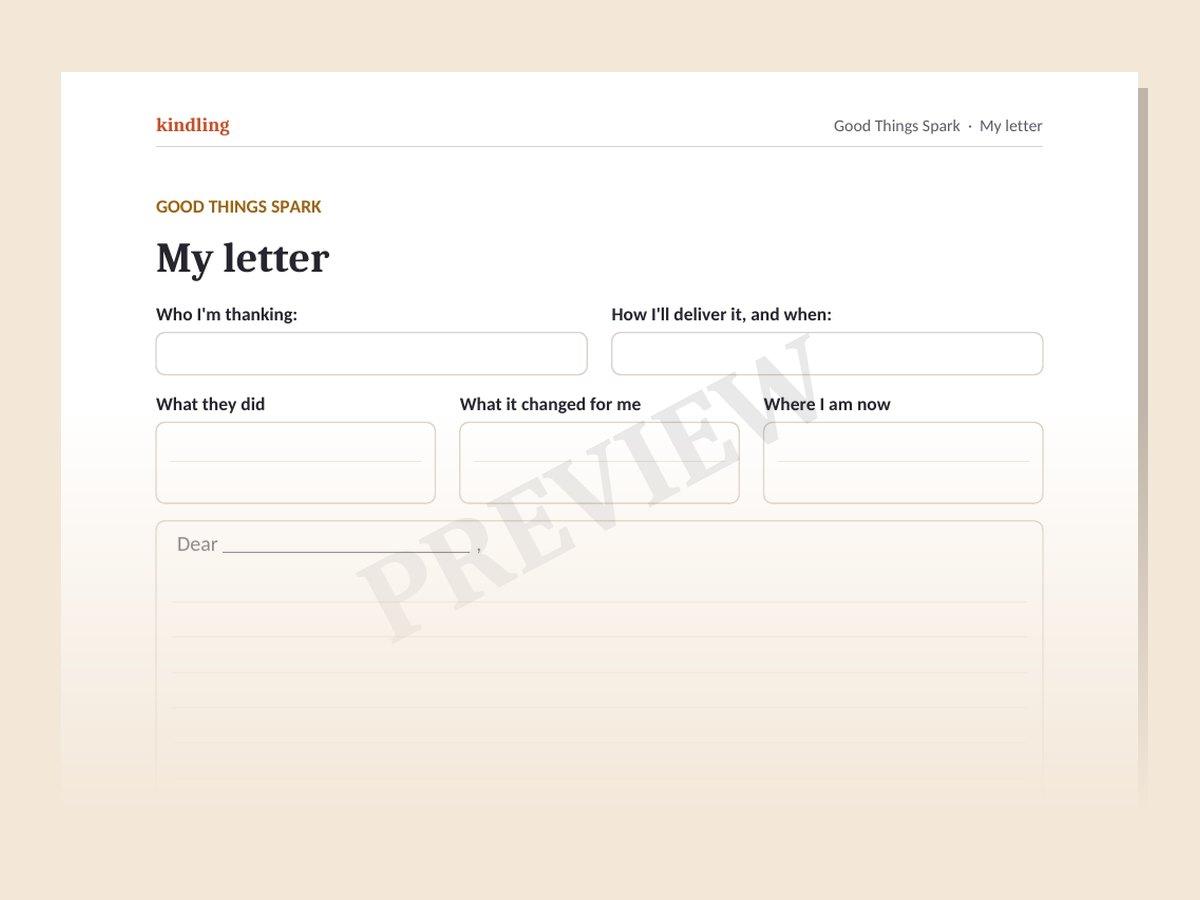
- Page 2: planning boxes (who, what they did, what it changed, where you are now, how and when you'll deliver it)
- A full letter area that starts "Dear ____,", sized for about 200 words
- An after-delivery box: how did it go, and how did you feel?
How to use it
20 to 30 minutes to write, once. Handwritten or typed both count.
How to do it
- Choose someone who made a real difference to you and whom you've never properly thanked.
- Say what they did, concretely. "You drove me to every appointment that spring."
- Say what it changed: how your life is different because of it.
- Say where you are now, then deliver it: read it aloud, send it, or keep it.
Why it works
In a 2005 randomized trial, writing and delivering a thank-you letter produced the largest short-term boost in happiness of five exercises tested, with effects lasting about a month. In later studies, letter writers expected receivers to feel less positive and more awkward than receivers actually reported.
The research (2)
- Seligman, M. E. P., Steen, T. A., Park, N., & Peterson, C. (2005). Positive psychology progress: Empirical validation of interventions. American Psychologist, 60(5), 410–421.
- Kumar, A., & Epley, N. (2018). Undervaluing gratitude: Expressers misunderstand the consequences of showing appreciation. Psychological Science, 29(9), 1423–1435.
Results are averages from study groups; your experience may differ.
Questions
The person I'd thank isn't safe to contact.
Write the letter and keep it. Writing it still helps you notice what you received. No one owes thanks to a person who harmed them.
License
Personal use. Print as many copies as you like for yourself and your household.
Read more: How to write a gratitude letter (and why it's less awkward than you think)
Next size up
Good Things Kit
Six small habits, one plan. 5 to 20 minutes a day, plus a 30-day tracker.
See it · $17Reviews
Write a reviewNo reviews yet. We ask every buyer for a review seven days after purchase and show all of them, good or bad.
Goes well with
Good Things Kit
Six small habits, one plan. 5 to 20 minutes a day, plus a 30-day tracker.
Three Good Things: 7-Night Tracker
A 5-minute bedtime habit for noticing what went right.
The Savoring Walk
A 20-minute walk where your only job is to notice what's good.
Good Things for Practitioners
The Kit's client pages plus a 4-page facilitator insert for gratitude and savoring homework.