Spark · Kinder
The Self-Compassion Pause
Three steps for the moment you mess up, get bad news, or feel like you're not enough.
- 2 minutes
- In the moment
- Wallet card + 7-day log
For you if you're your own toughest critic. When you make a mistake, get bad news, or feel like you're not enough, the voice in your head makes it worse.
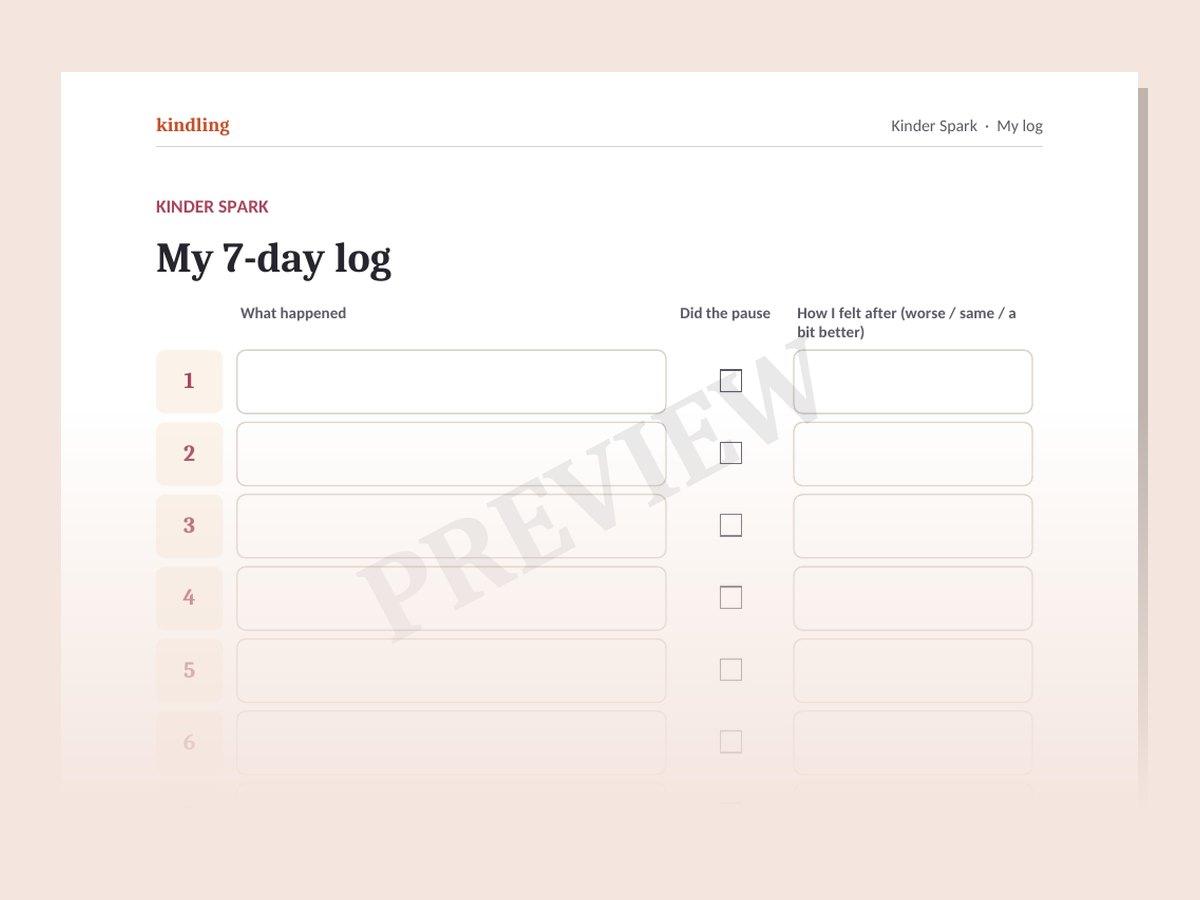
The Pause is a two-minute practice in three steps. Notice ("This is hard"), connect ("I'm not the only one") and be kind ("What do I need right now?"). You write your own phrase for each step, so it feels true rather than scripted, and keep them on a cut-out card. A week of logging shows you which step helps most. Being kind to yourself isn't letting yourself off the hook; research suggests it makes people more likely to learn from mistakes.
What’s inside
- Page 1: the three steps with examples, and a cut-out card with space for your own three phrases
- Page 2: a 7-day log (what happened, did you pause, how you felt afterward)
- A reflection: which step is hardest for you, and which helps most?
How to use it
2 minutes, in the moment, whenever something hurts. Log it once a day for a week.
How to do it
- Notice: "This is hard." Name what's happening without judging it.
- Connect: "I'm not the only one." Everyone makes mistakes and struggles sometimes.
- Be kind: "What do I need right now?" Say something supportive, the way you would to a friend.
Why it works
Psychologist Kristin Neff describes self-compassion as three parts: noticing pain mindfully, remembering it's part of being human, and responding with kindness. In a randomized trial, an 8-week self-compassion program increased self-compassion and wellbeing and reduced stress; this pause is a two-minute practice built on those three parts.
The research (2)
- Neff, K. D. (2003). Self-compassion: An alternative conceptualization of a healthy attitude toward oneself. Self and Identity, 2(2), 85–101.
- Neff, K. D., & Germer, C. K. (2013). A pilot study and randomized controlled trial of the mindful self-compassion program. Journal of Clinical Psychology, 69(1), 28–44.
Results are averages from study groups; your experience may differ.
Questions
This brought up strong feelings.
That's common; it's sometimes called backdraft. Pause, do something grounding, and come back later, or not at all.
License
Personal use. Print as many copies as you like for yourself and your household.
Read more: The self-compassion pause: three steps for the moment you mess up
Next size up
Kinder Kit
A week of going easier on yourself (and still getting things done).
See it · $17Reviews
Write a reviewNo reviews yet. We ask every buyer for a review seven days after purchase and show all of them, good or bad.
Goes well with
Kinder Kit
A week of going easier on yourself (and still getting things done).
Inner Coach Rewrite
Swap the harsh inner critic for a coach who still wants you to do well.
The Kind Letter
Write to yourself about something you're hard on yourself for, from someone who's firmly on your side.
Kinder for Practitioners
Self-compassion homework for perfectionism, shame and self-criticism, with a 4-page facilitator insert.